FREE SHIPPING FOR ANY COLLECTED BOUNTIES ABOVE IDR 1.750.000 / USD 175. LIMITED TIME ONLY! HUDDLE UP! *T&C APPLIED


Sold Out
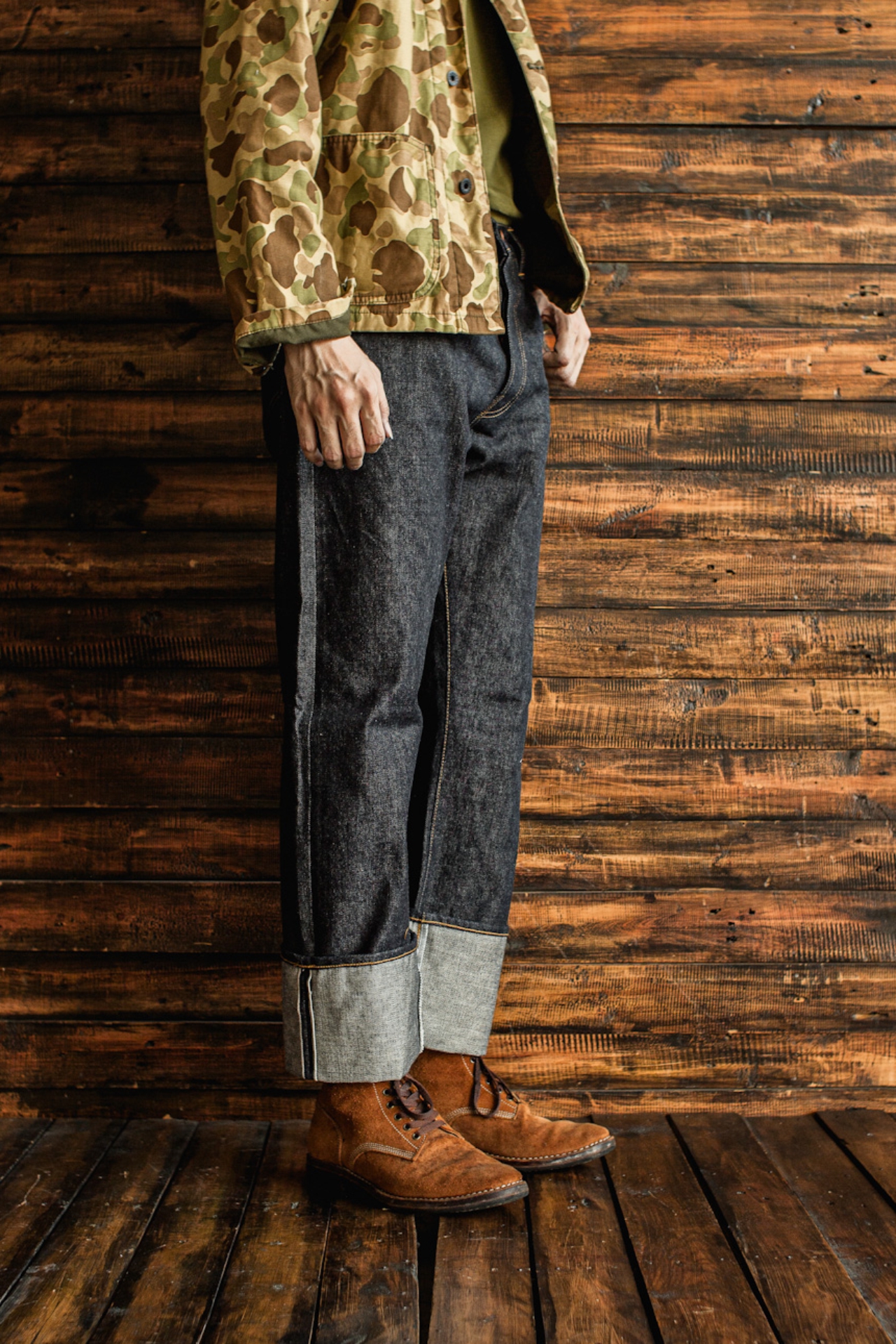
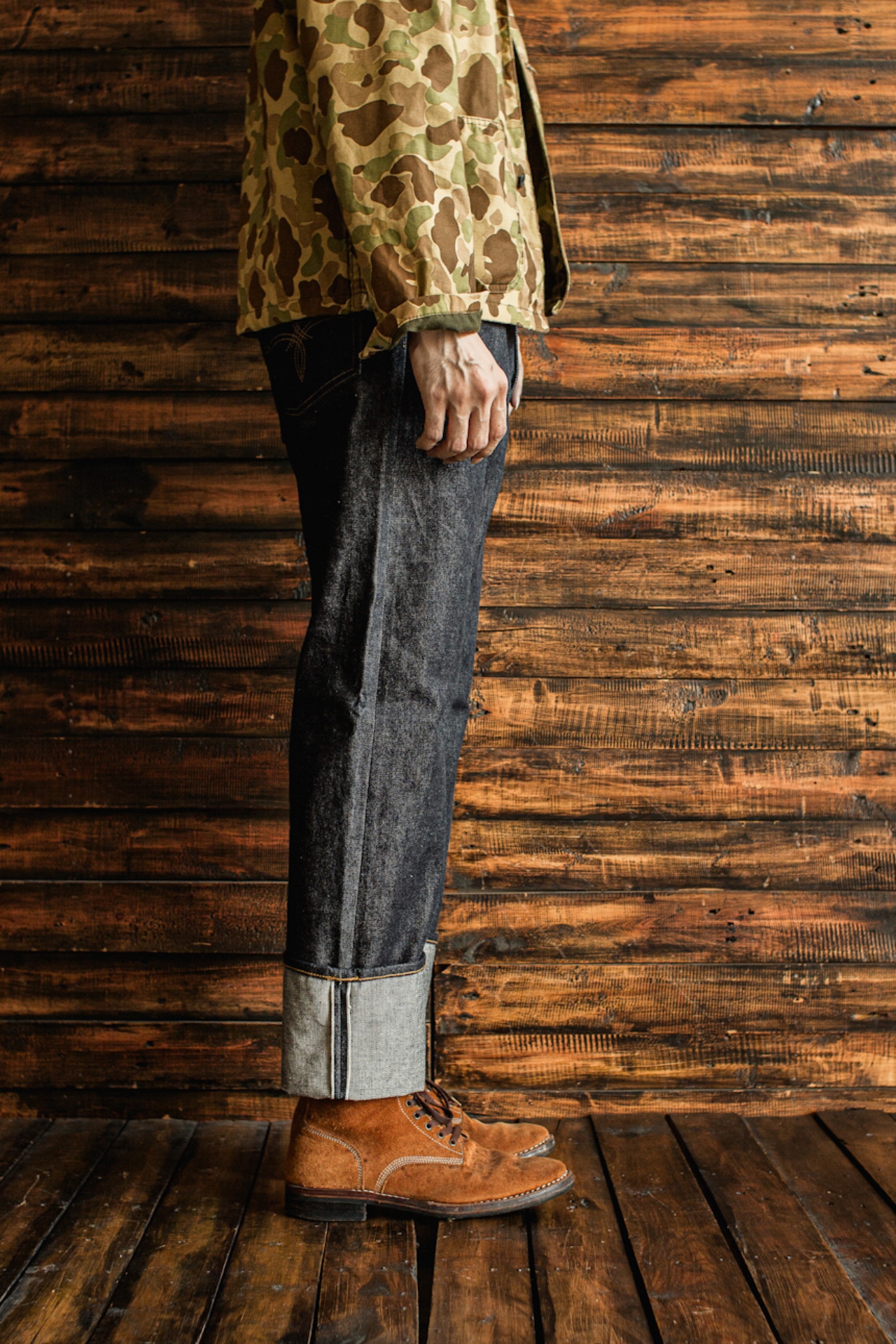
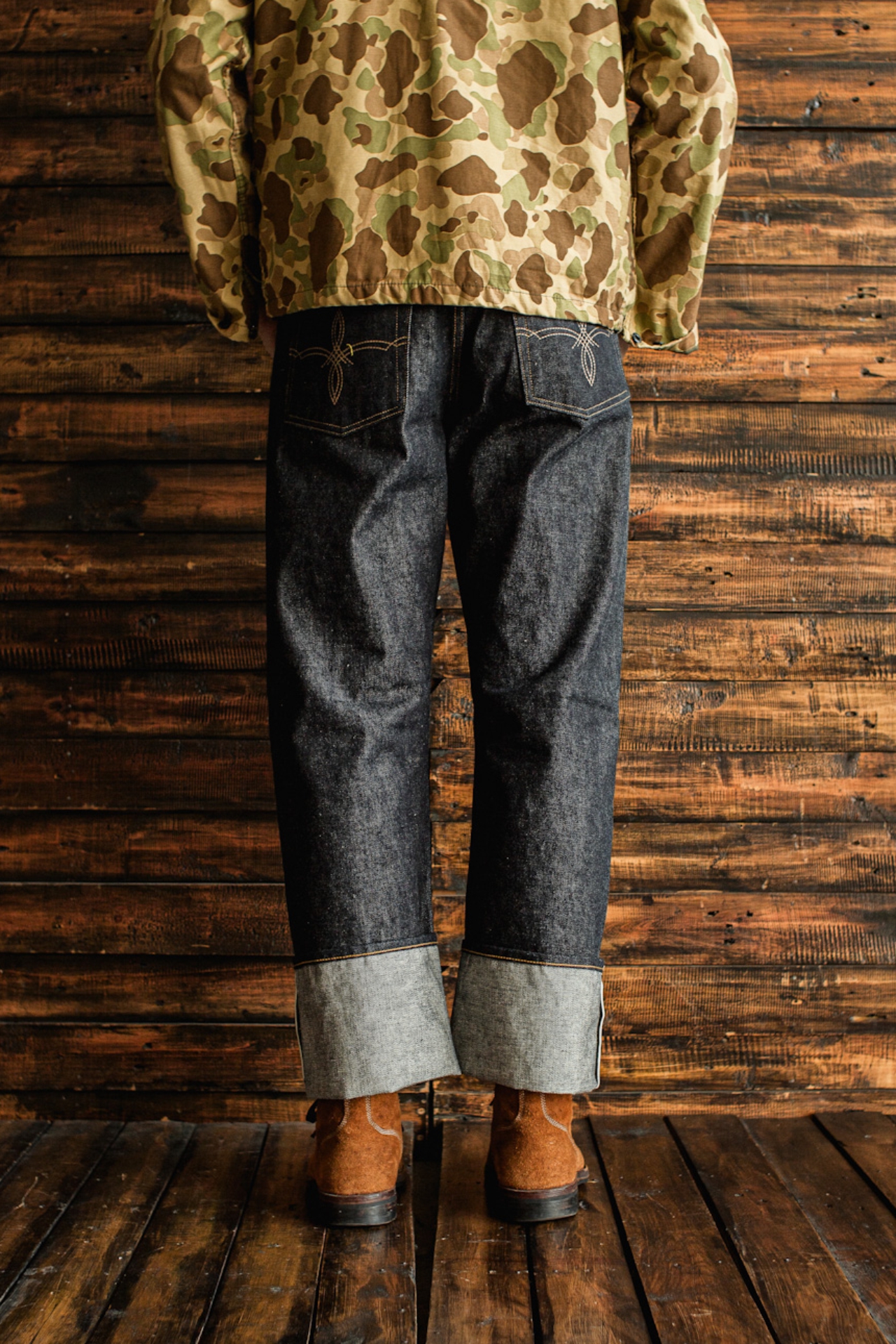
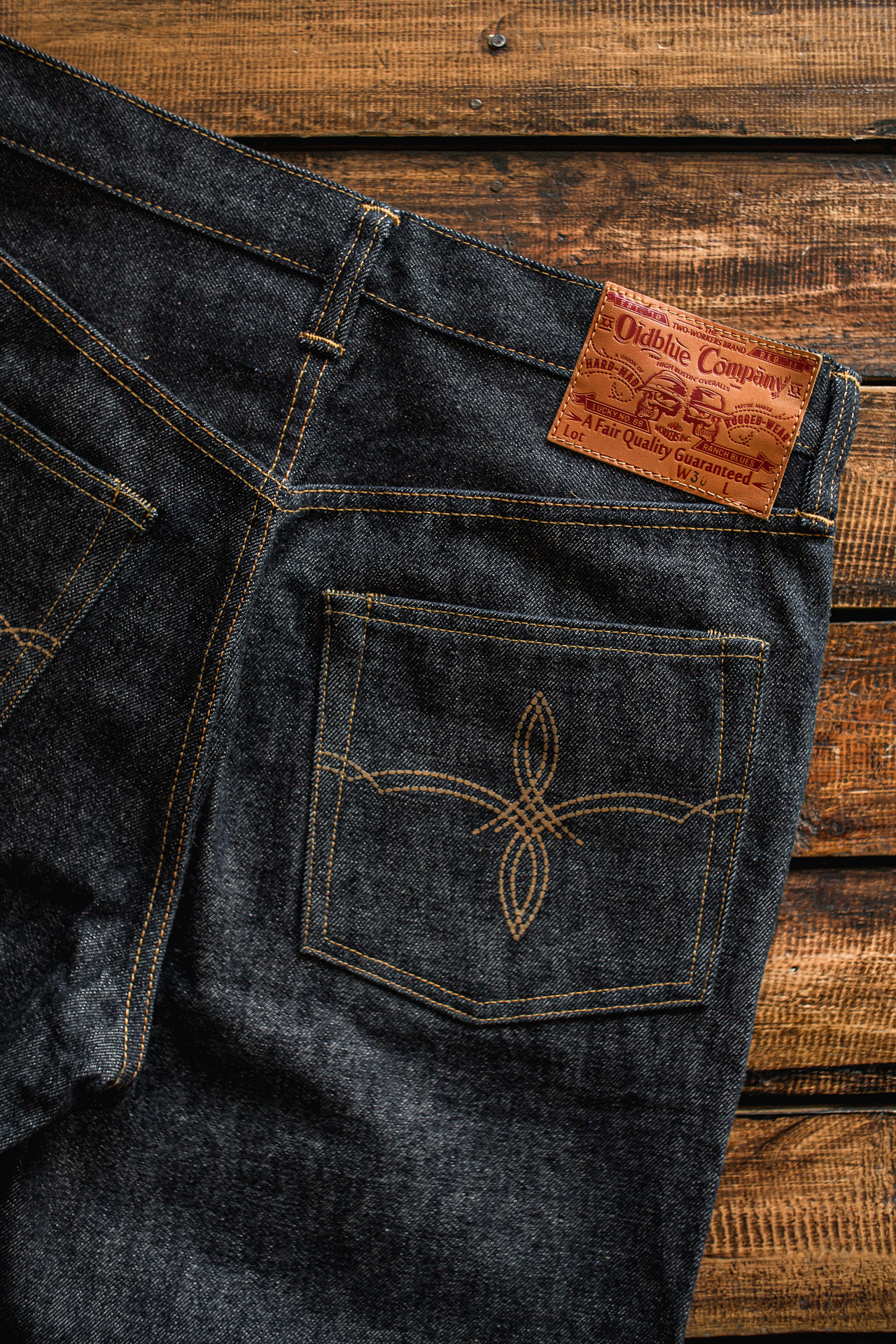
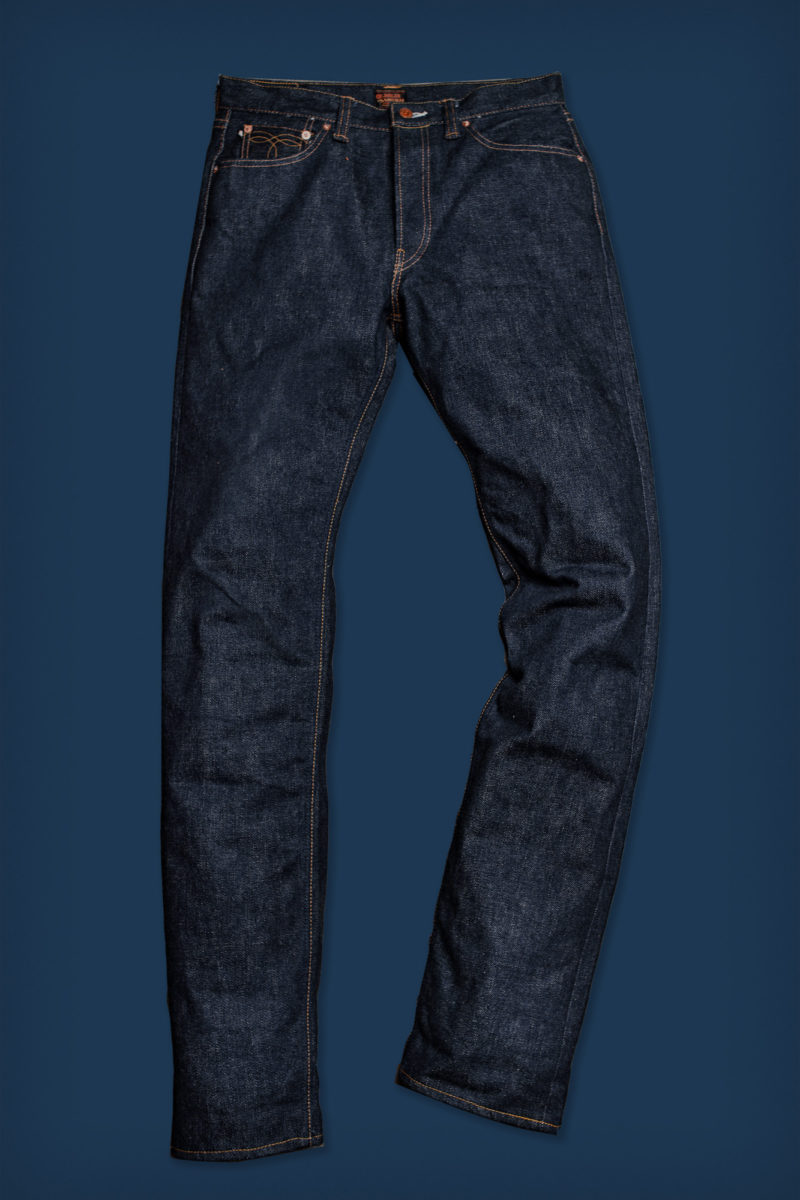
'44 Cut - 14 Oz WWII Selvedge Okayama
IDR 2,550,000.00
Description
When we talk about a 1944 World War II era jean, we’re really talking about a product shaped as much by war policy as by design. The 1944 jean isn’t just a style, it’s a direct artifact of scarcity, regulation, and industrial adaptation. By 1942, the U.S. government introduced strict controls under the War Production Board to conserve raw materials for the military. This included textiles, metals, and labor. Clothing manufacturers were required to simplify garments under what was called utility production.
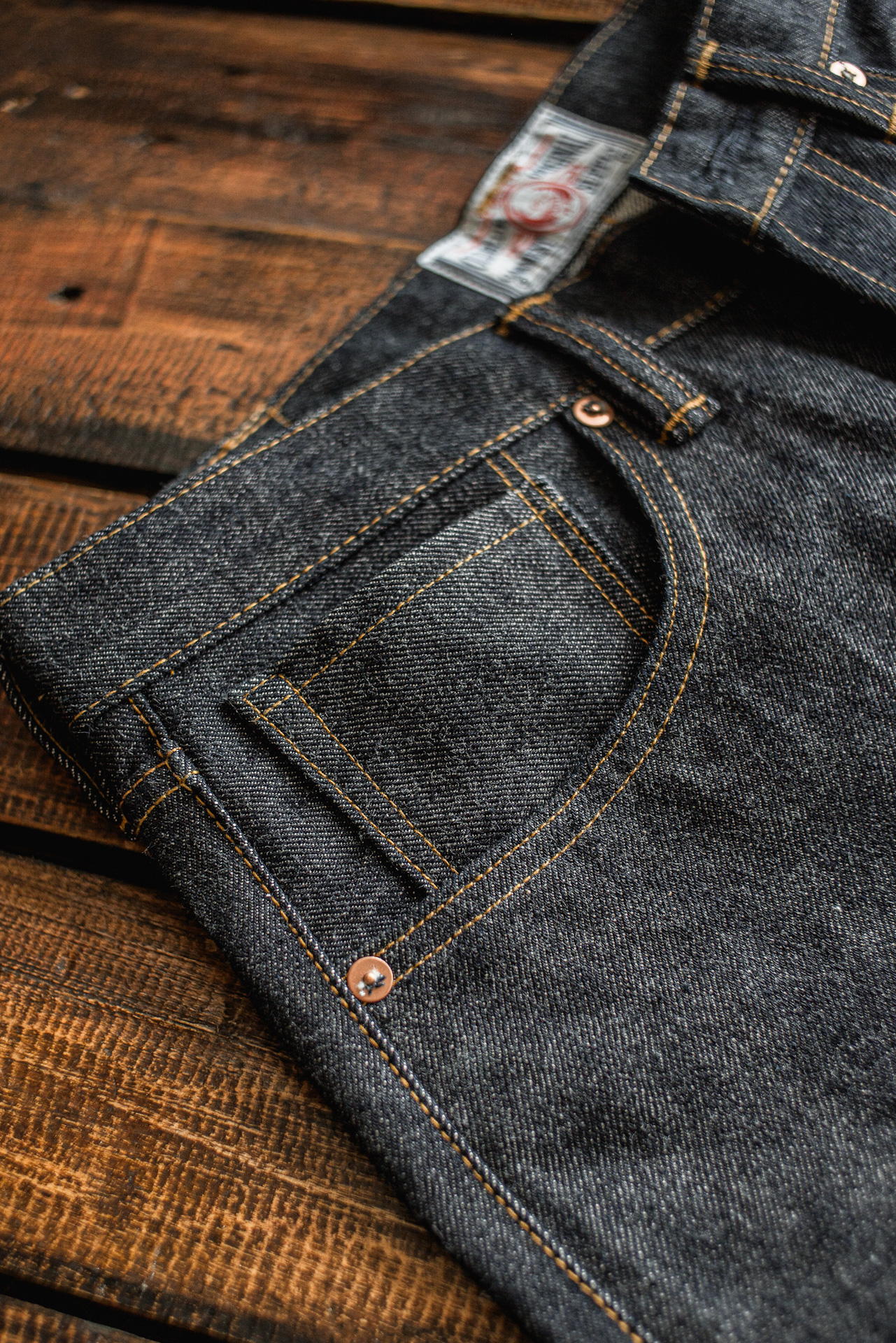
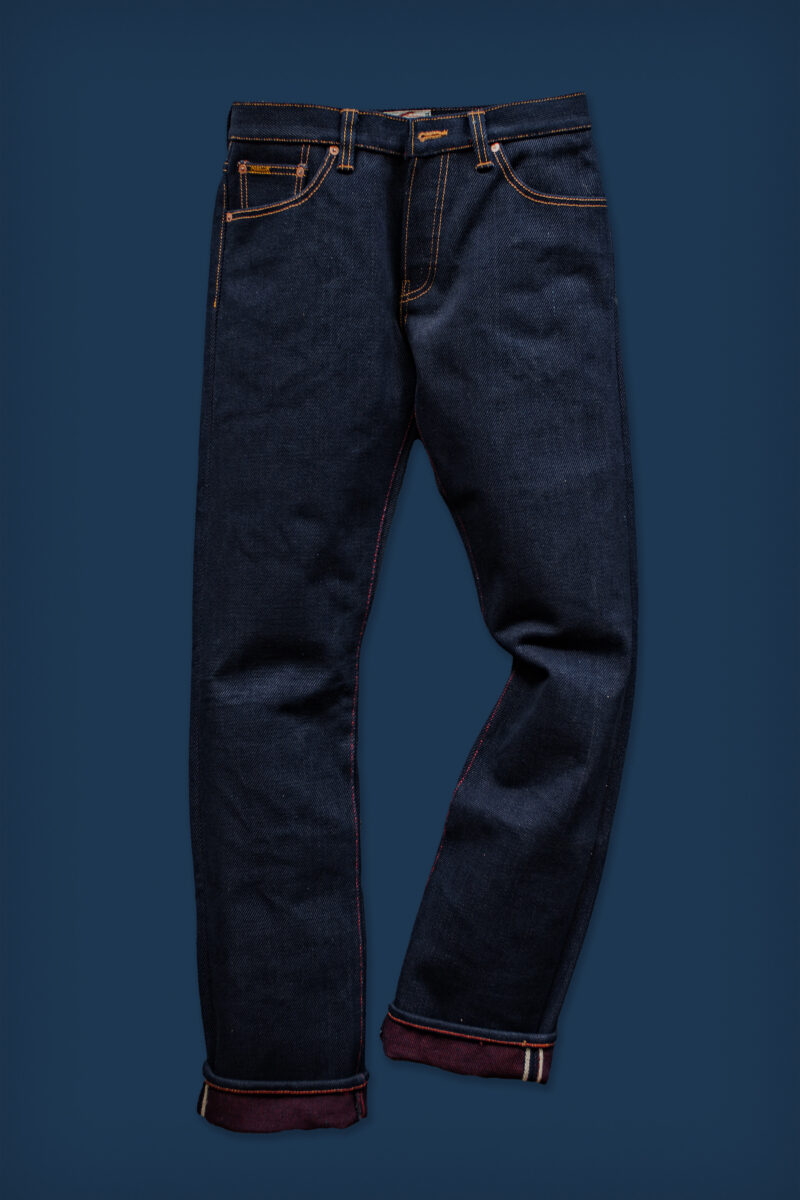
Denim brands back then didn’t stop making jeans, but they had to modify them to meet regulations. The result is what collectors now call ‘WWII Models’ or something like ‘Wartime Jeans’. The 1944 version is often considered as the pure expression of wartime rationing. Metal was reserved for weapons and machinery, and that reality is reflected directly in the garment. Details we take for granted like cinch back, crotch rivet, and even coin pocket rivets, were removed. Every component had to justify its use.
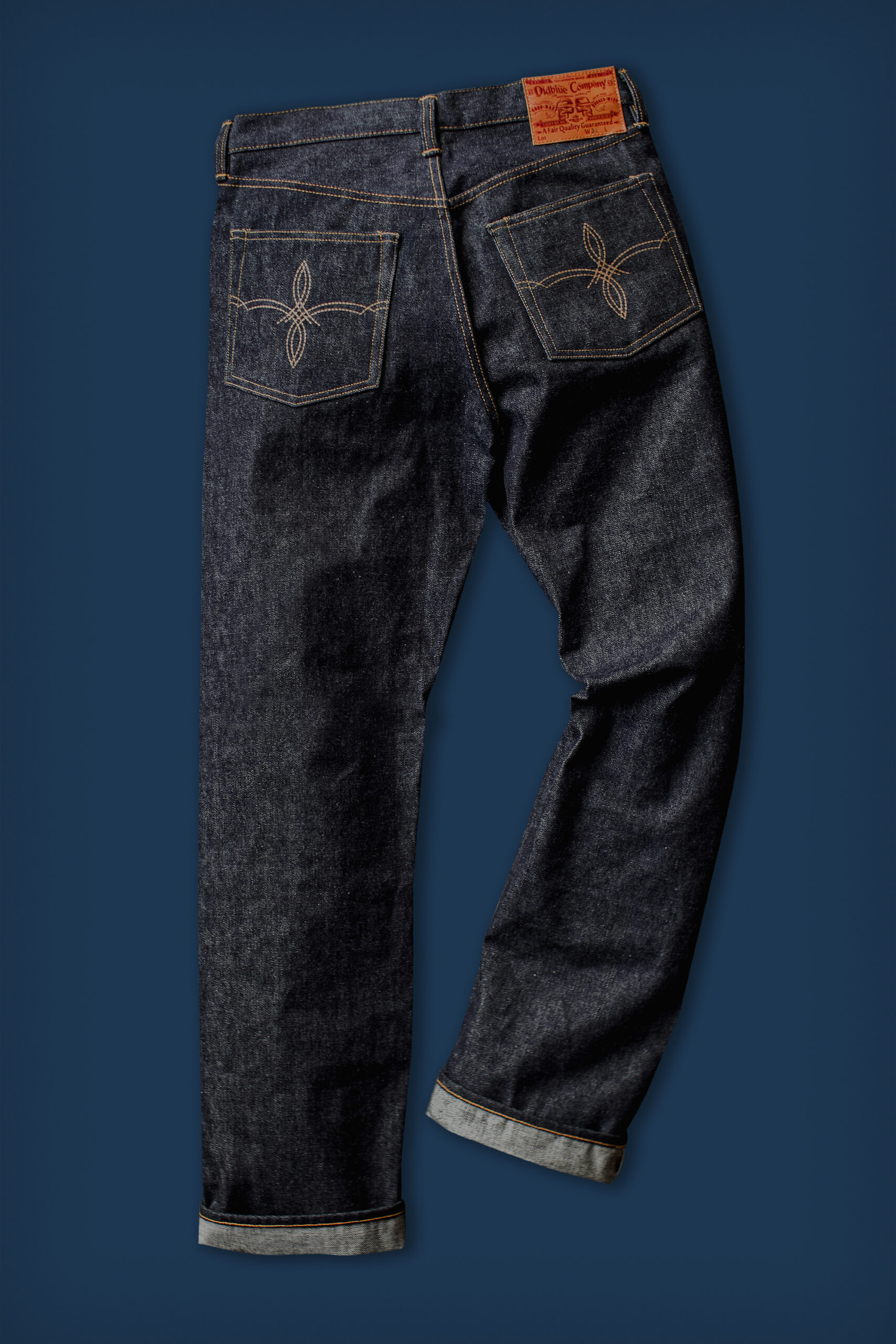
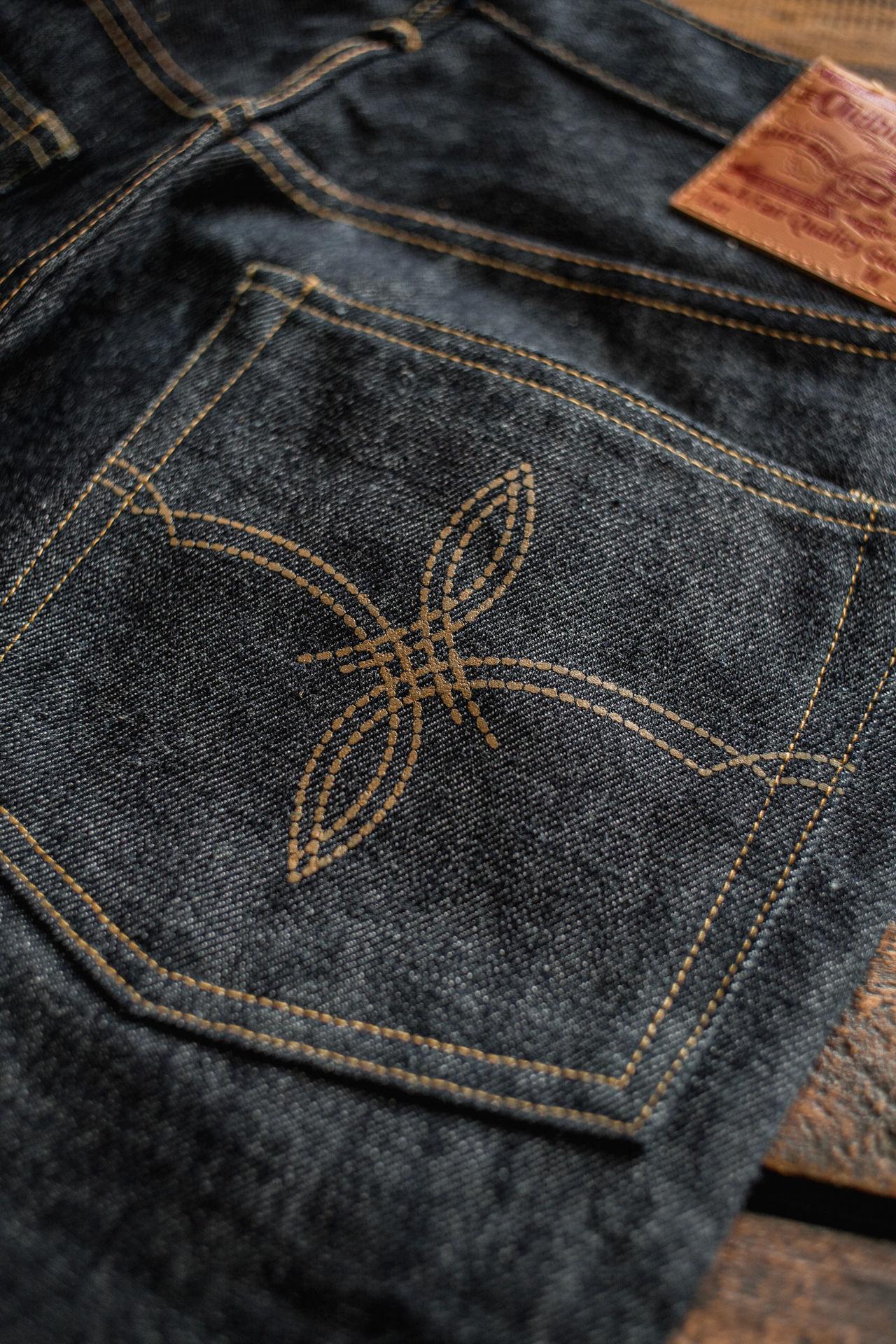
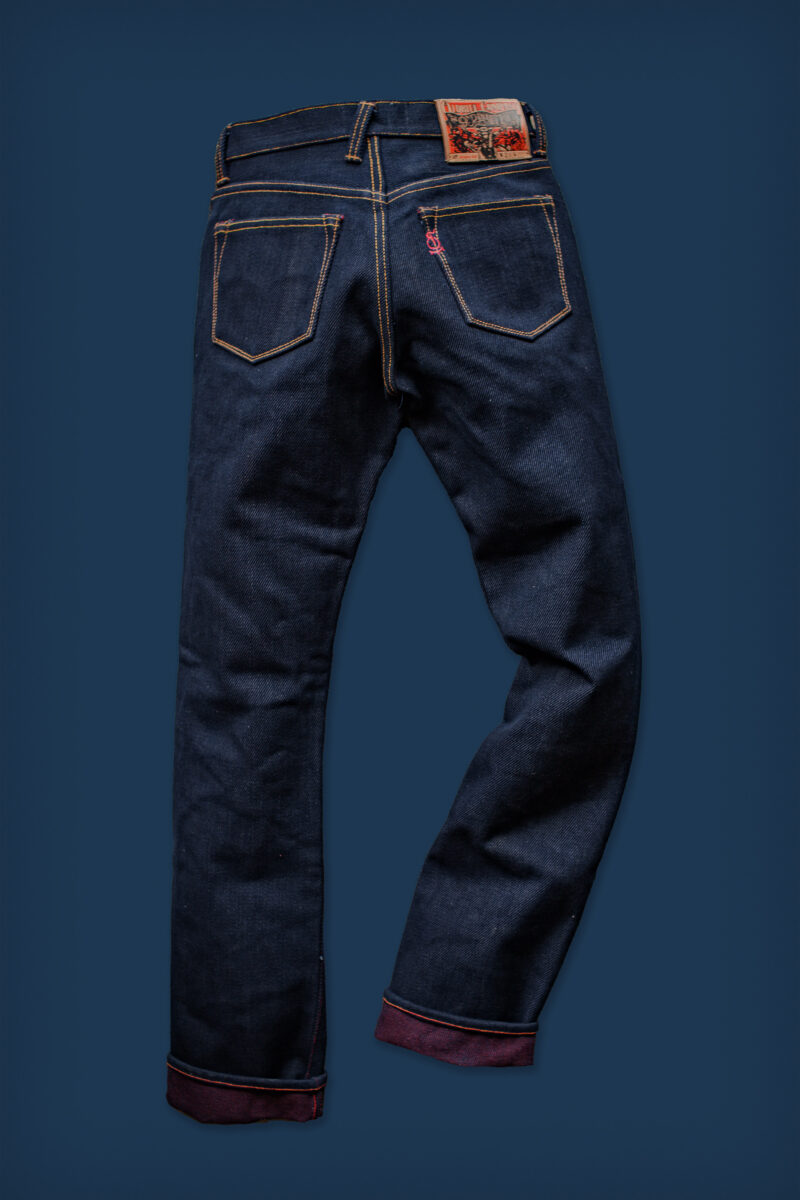
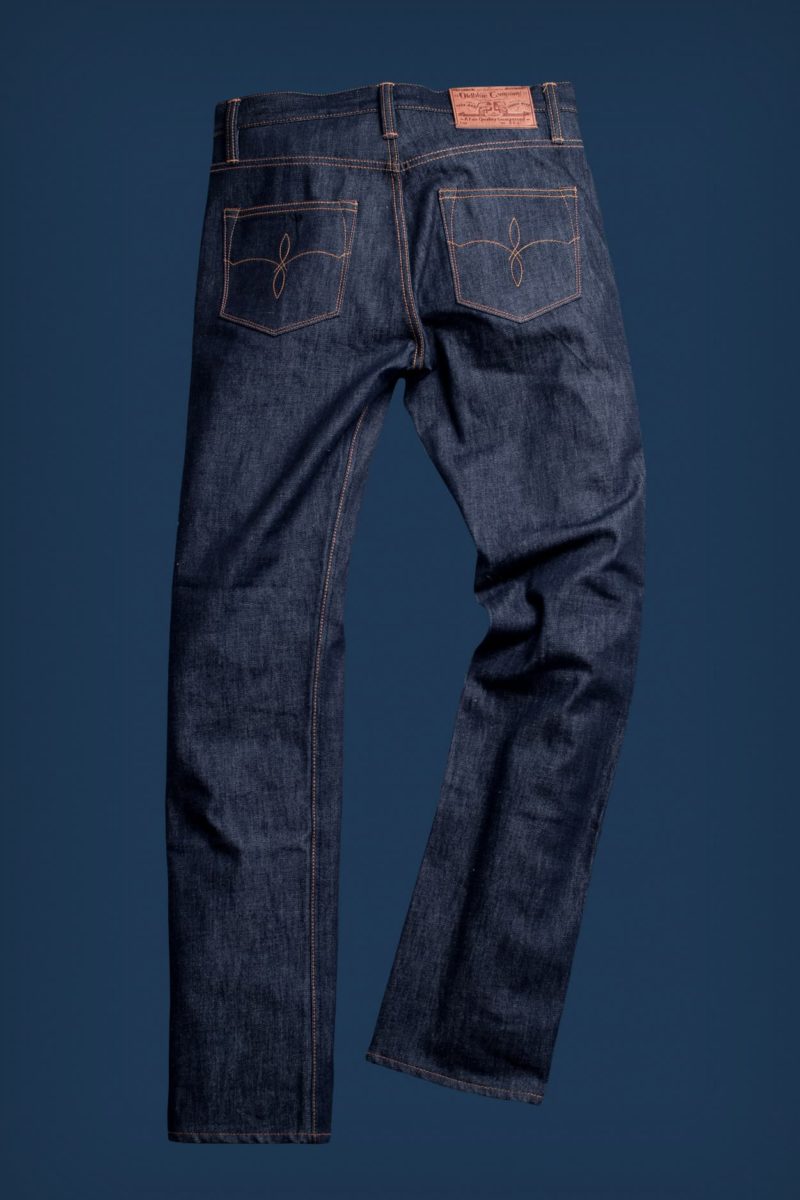
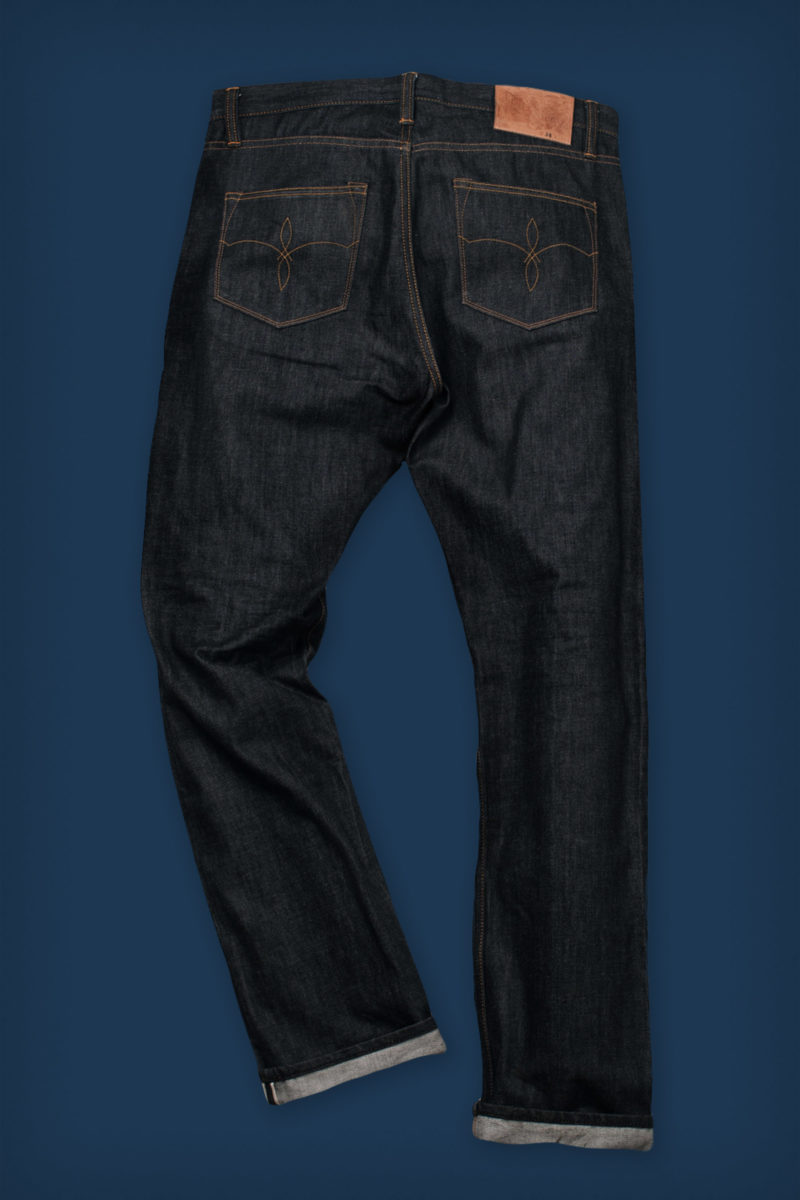
One of the most iconic changes is what we call today by the painted arcuate. The signature back pocket stitching, once sewn in thread, was instead painted on. Obviously as the other form of rationing effort to save thread and time. Over the time, this detail has become a defining feature of 1944 repro jeans. That particular moment when even the smallest detail had to justify its existence. When design was dictated not by style or trend, but by necessity.
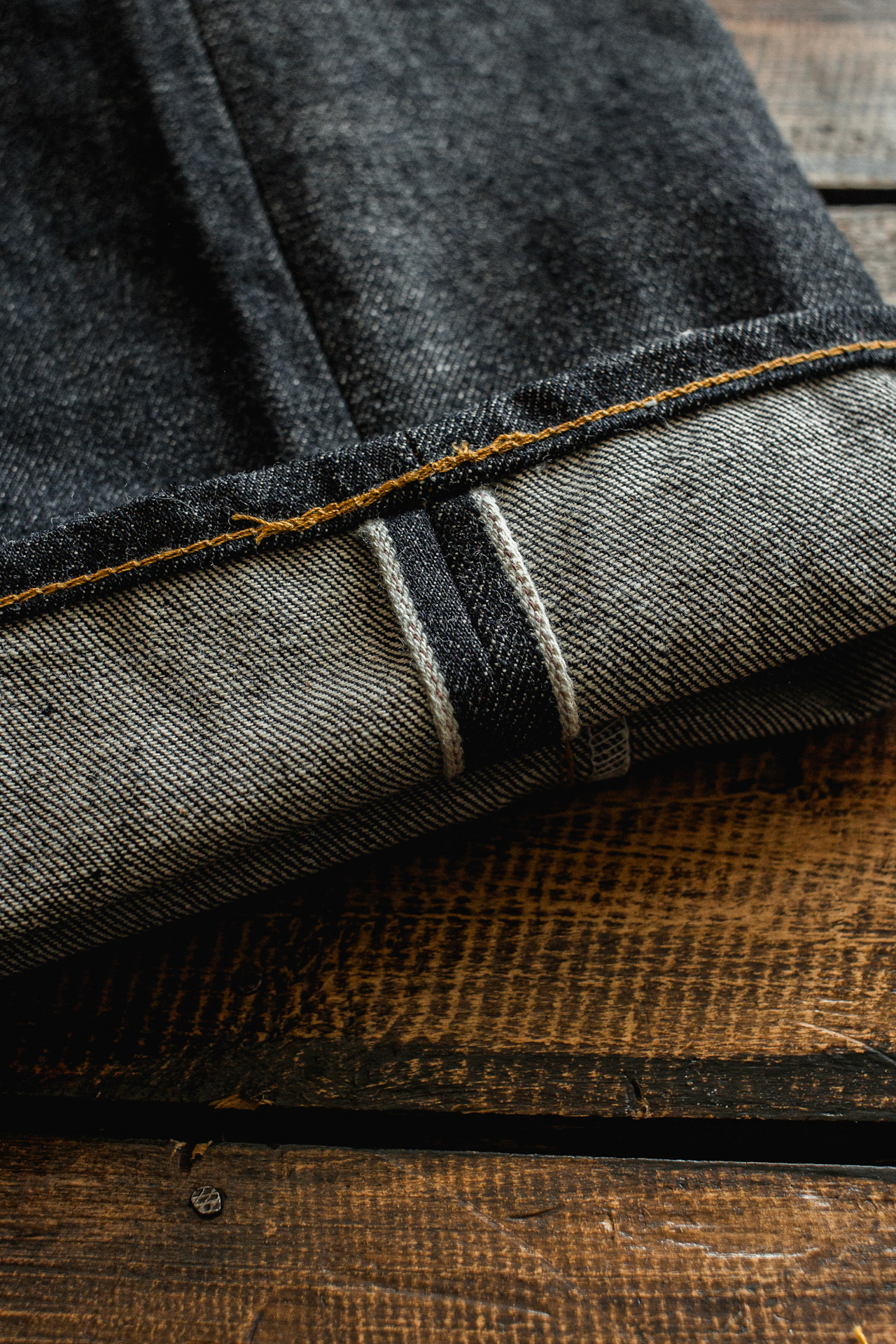
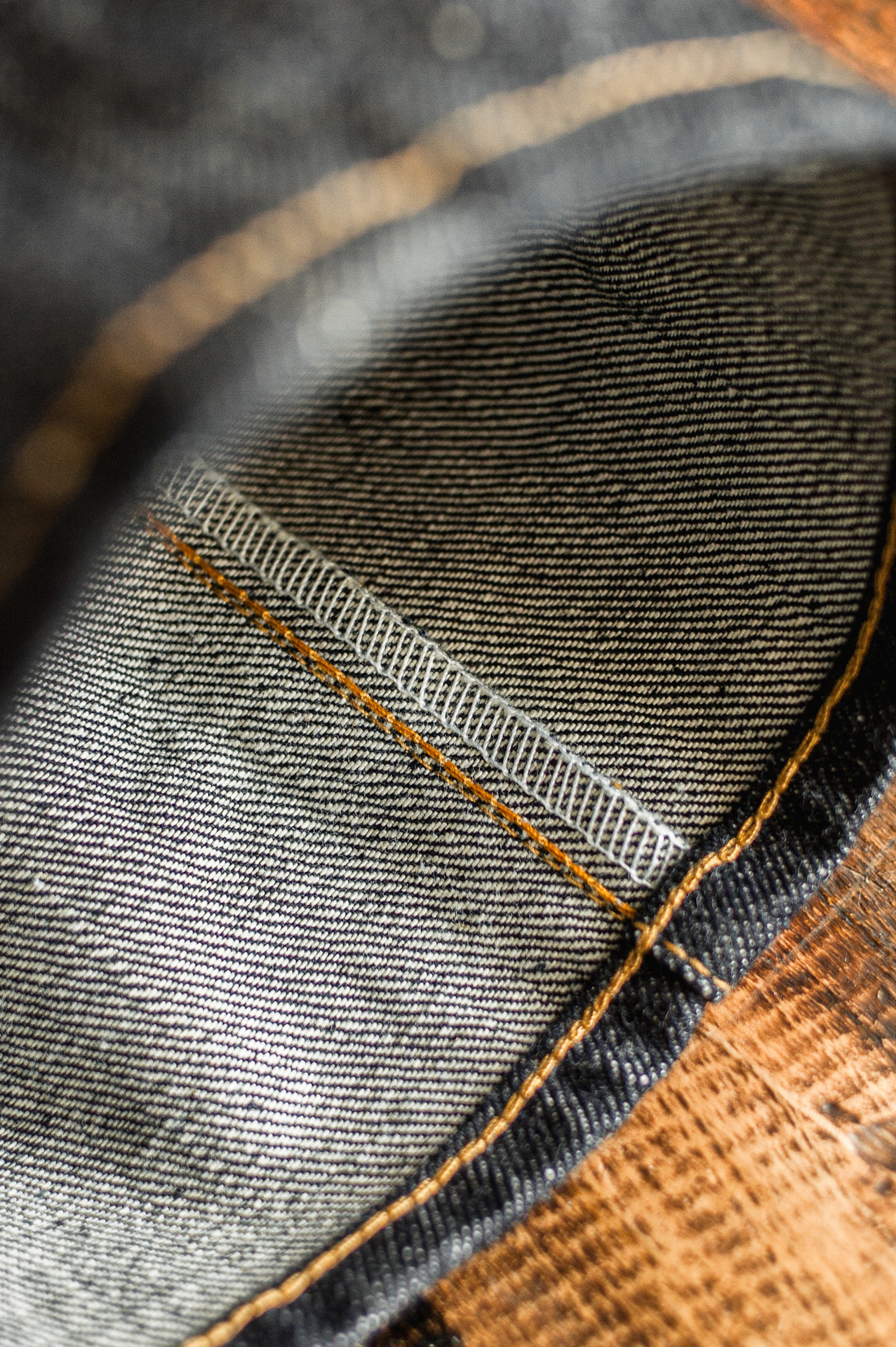
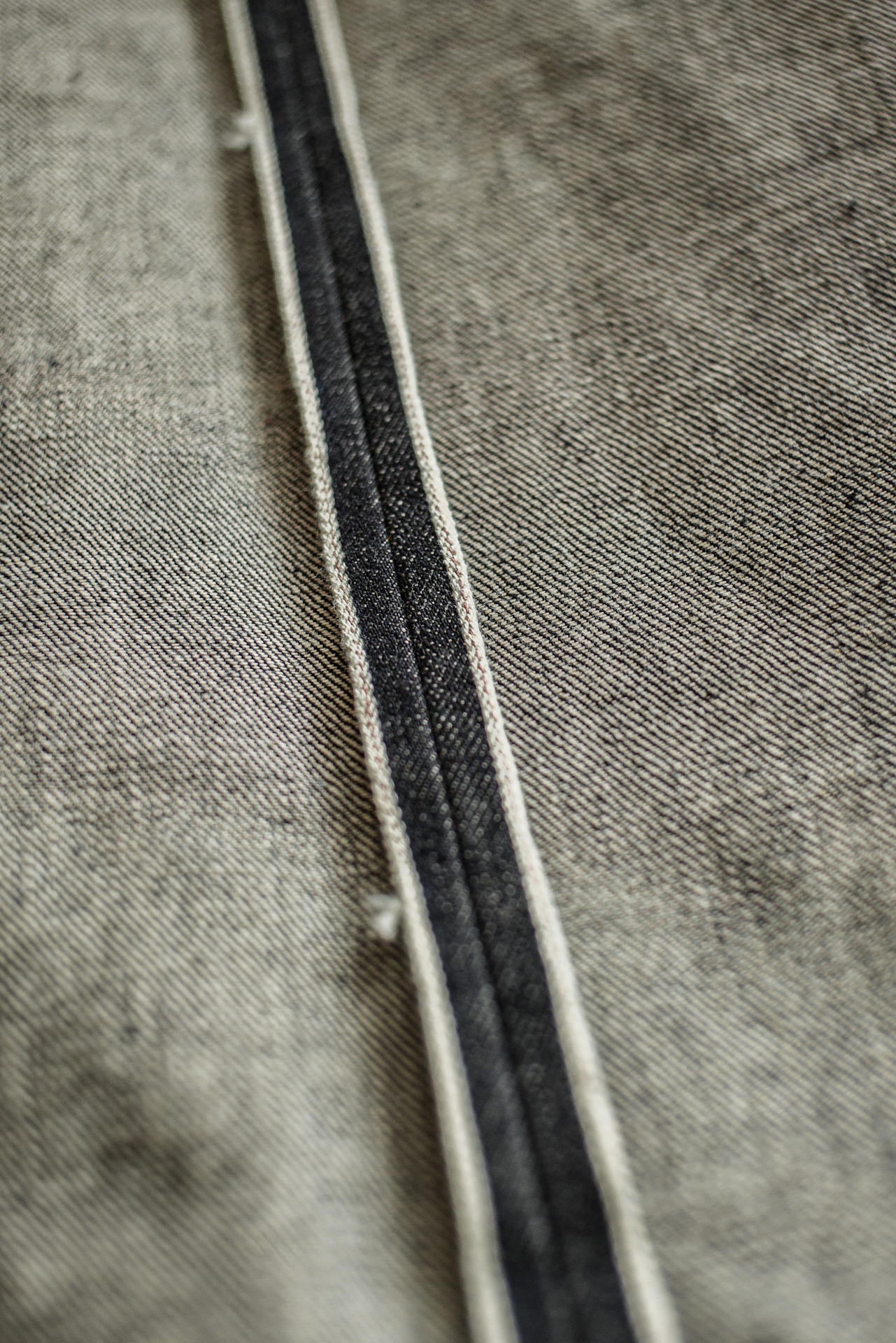
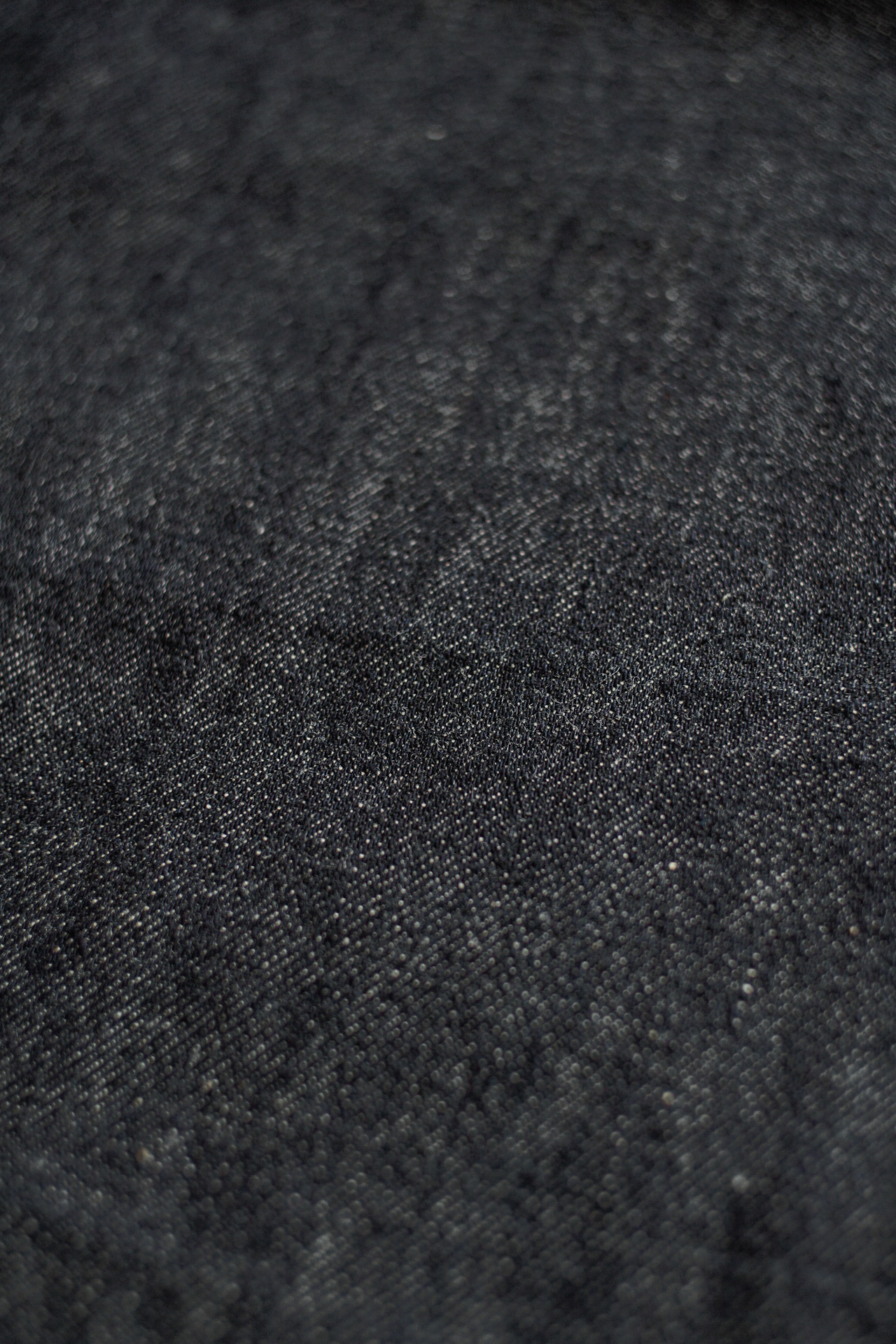
We utilize a 14 oz. / sq. yd indigo denim for this Wartime Model. It’s shuttle loomed in Okayama, Japan. The fabric was carefully designed to mirror original WWII-era denim in every aspect; from yarn count and twist, fabric density, indigo tone, to the finishing. This is loom-state, unsanforized denim, just as it would have been during the wartime years when finishing processes were minimized. What you get is the denim in its purest form; irregular, rough n’ hairy, and full of character.
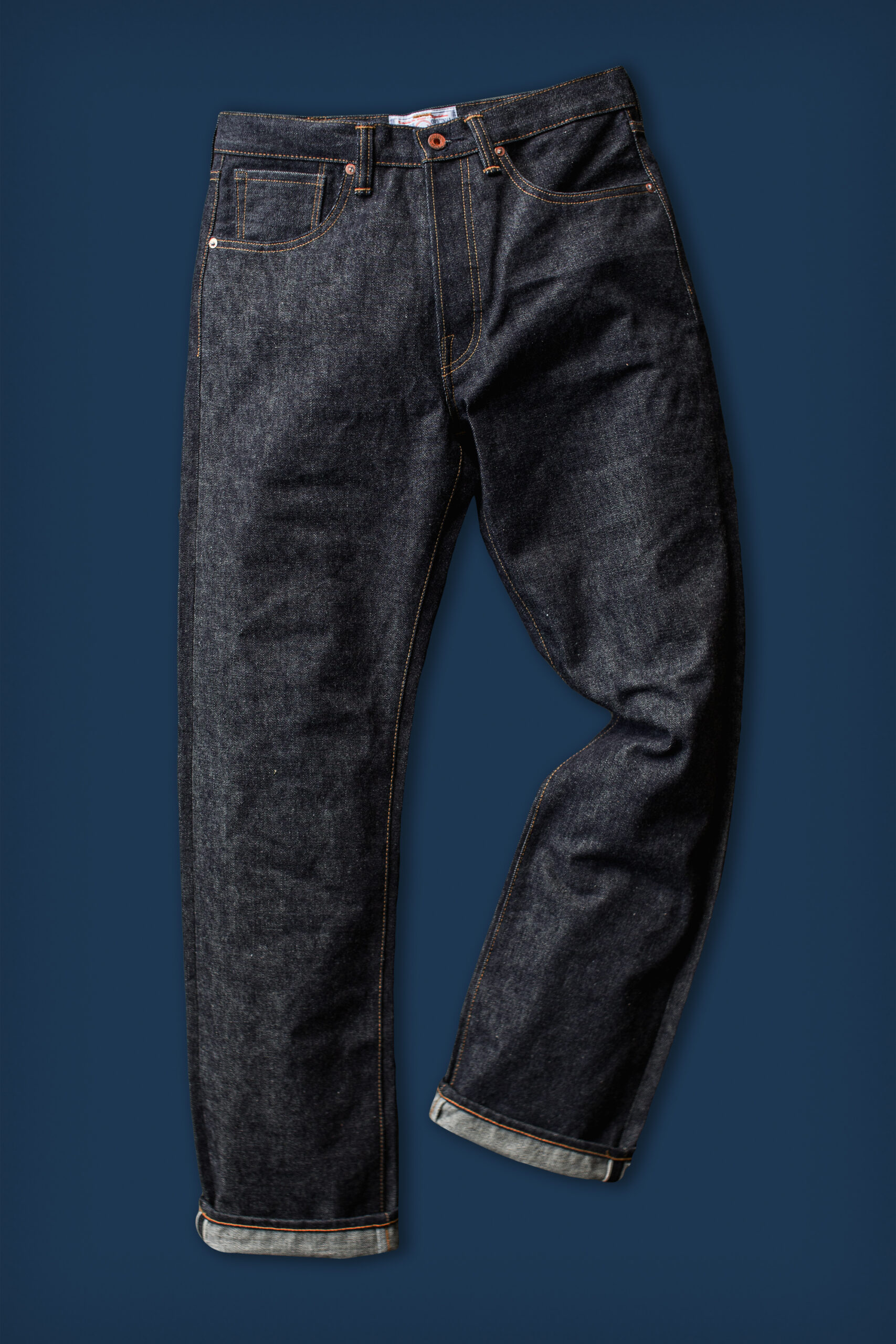
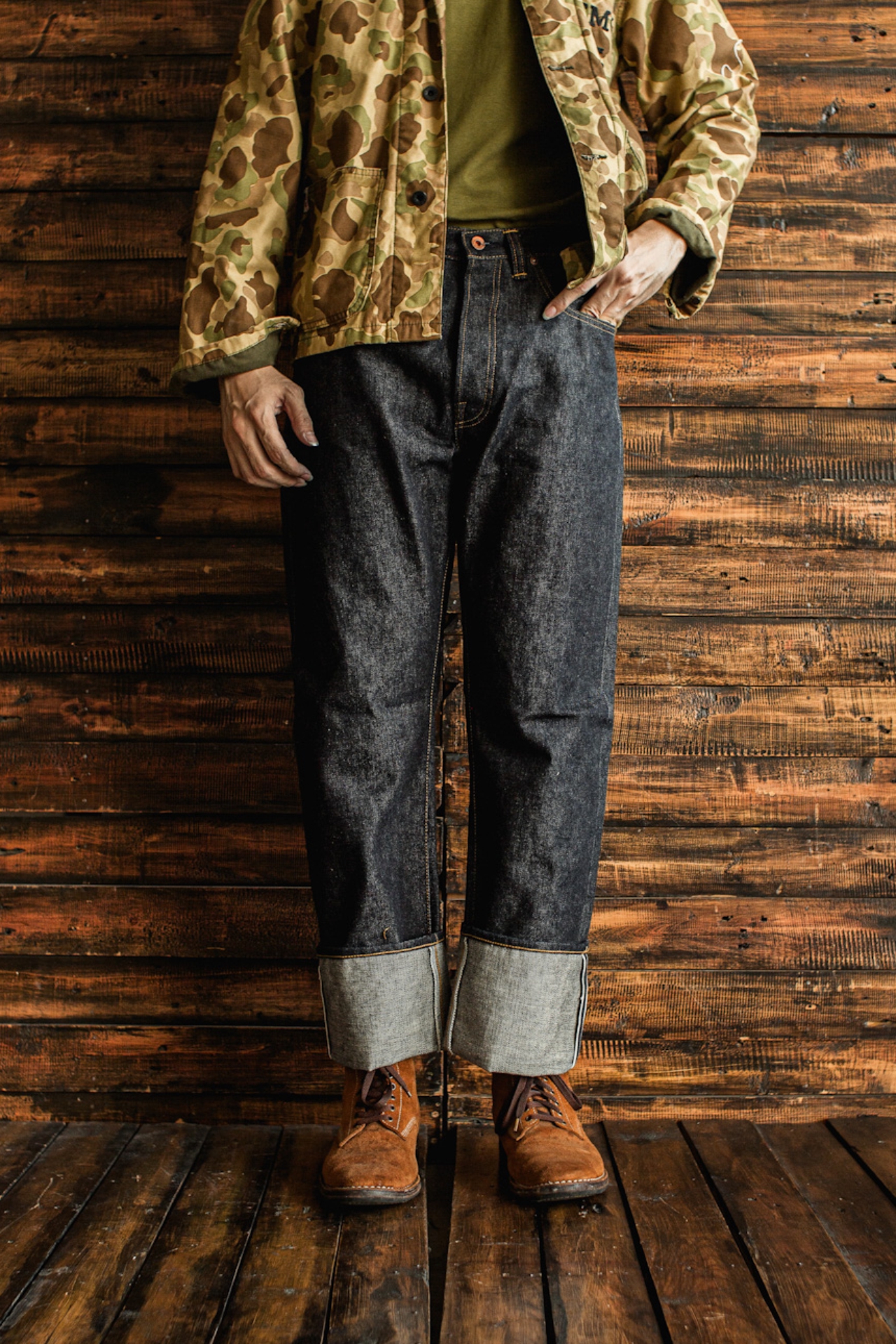
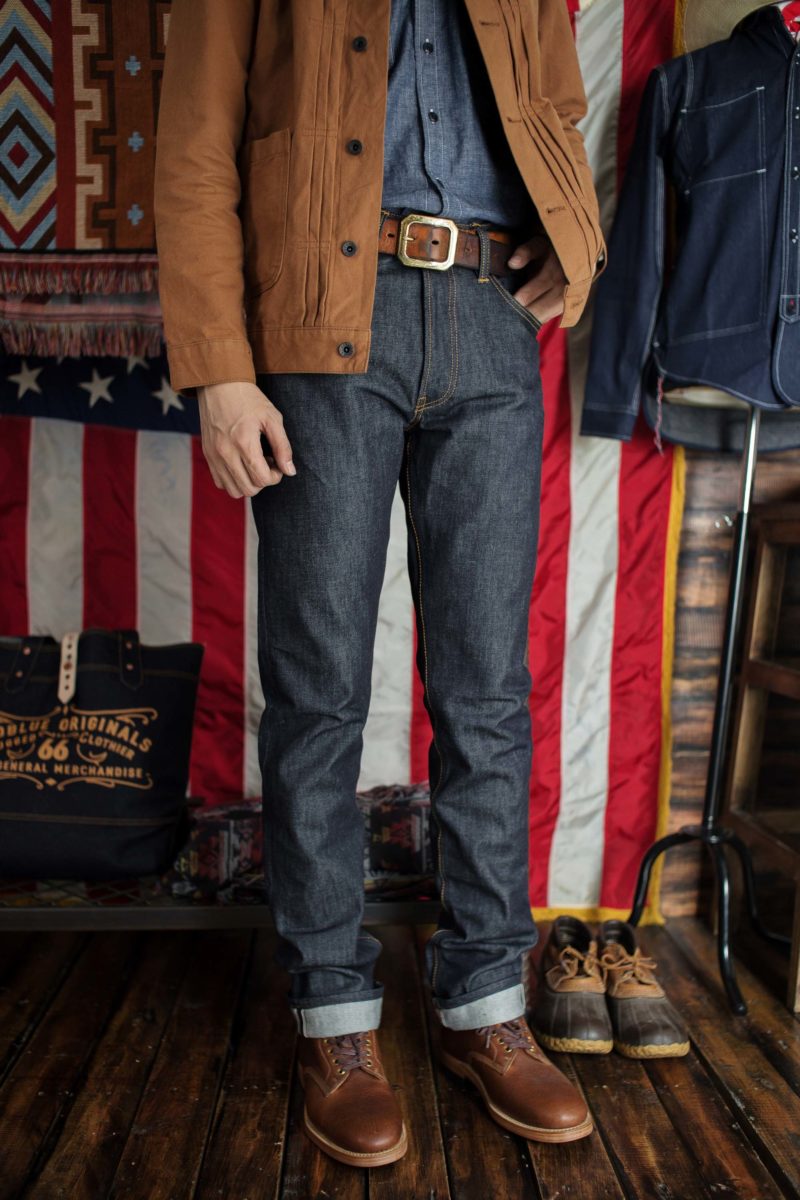
The fit follows the same philosophy of the era, when jeans weren’t made to look good, but to work. A high rise provides coverage and stability for constant movement. The top block is roomy, allowing freedom to squat, crouch, and bend without restriction. The leg falls straight, designed to sit naturally over work boots. It’s a silhouette shaped by function, not fashion.
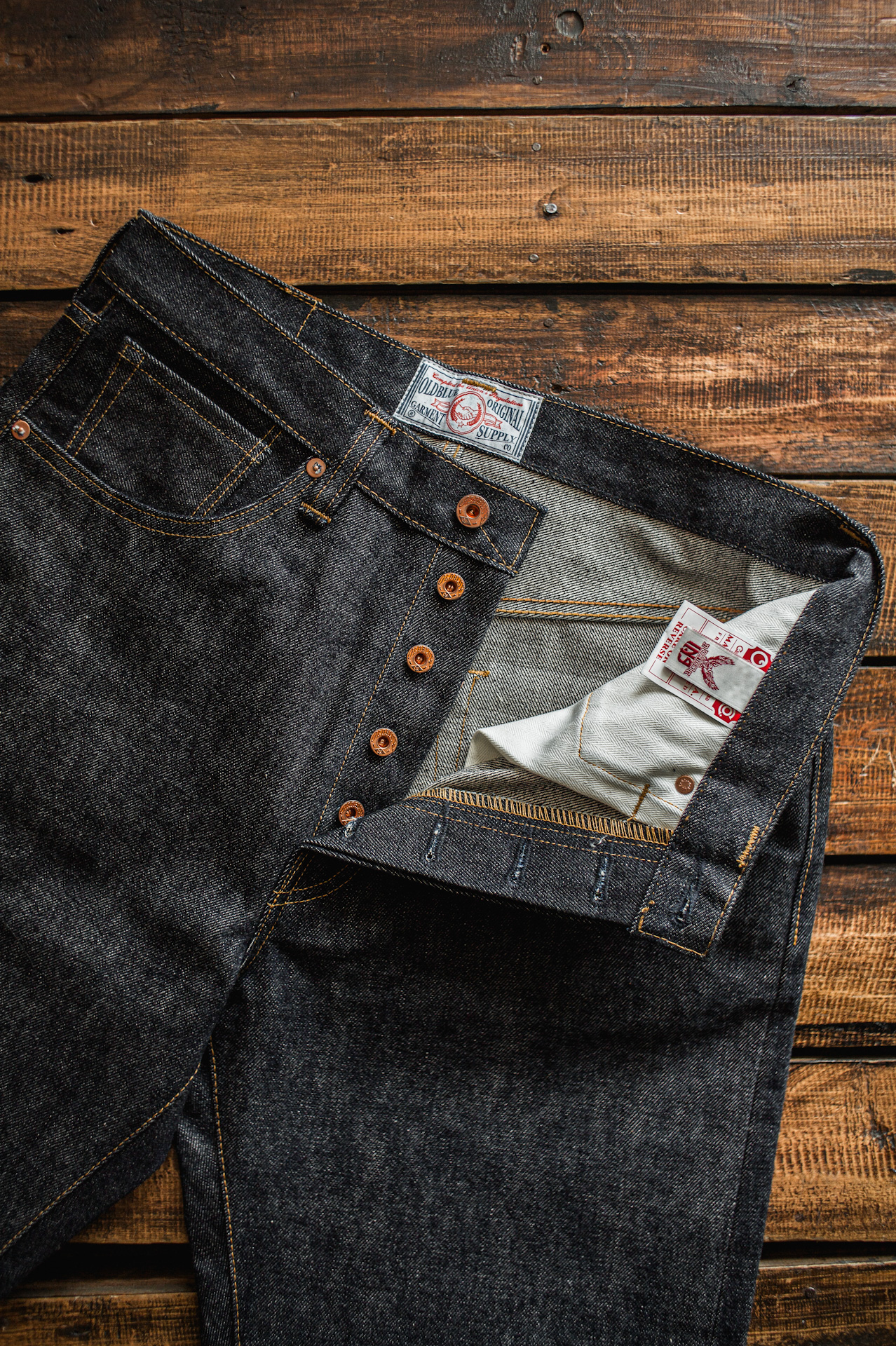
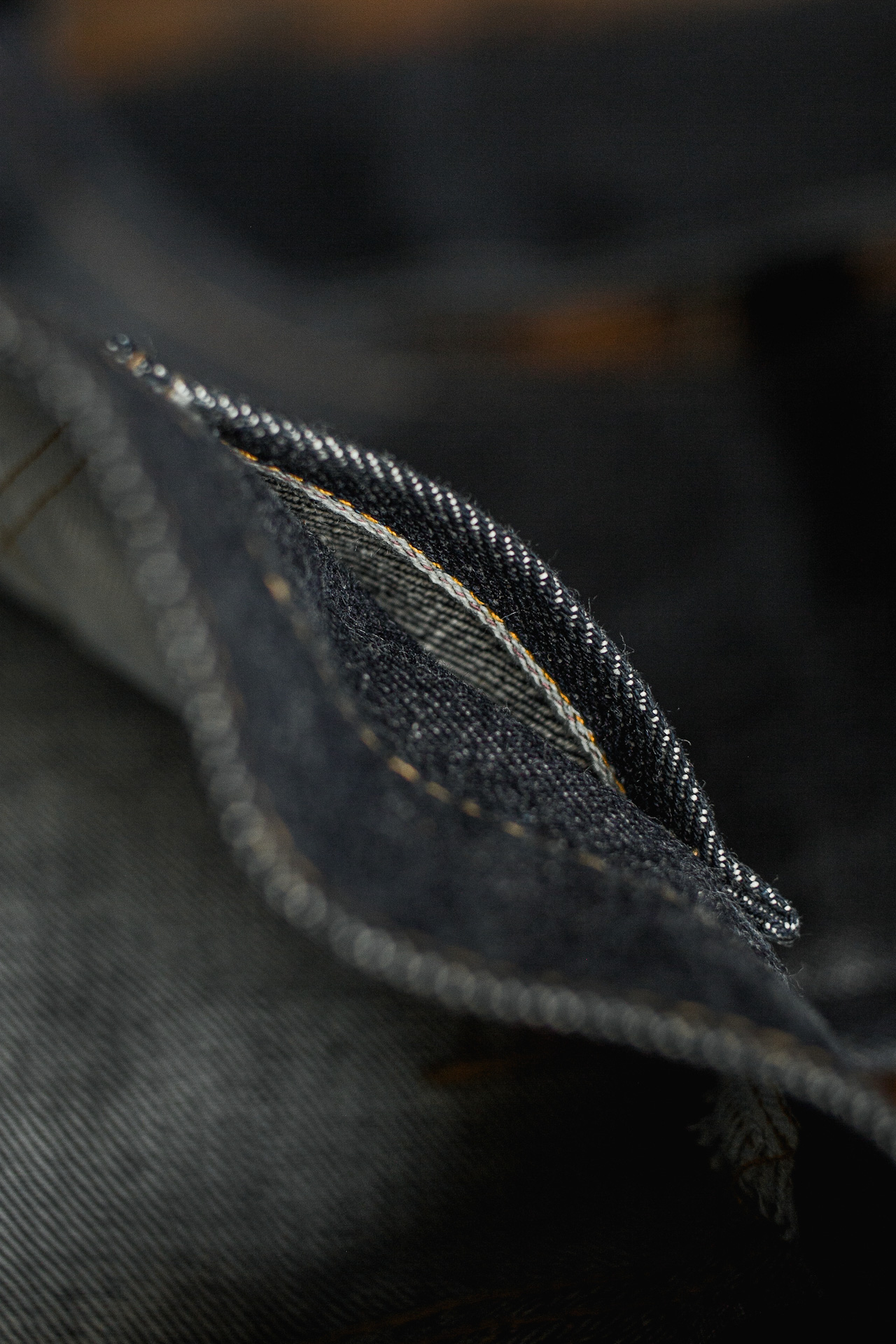
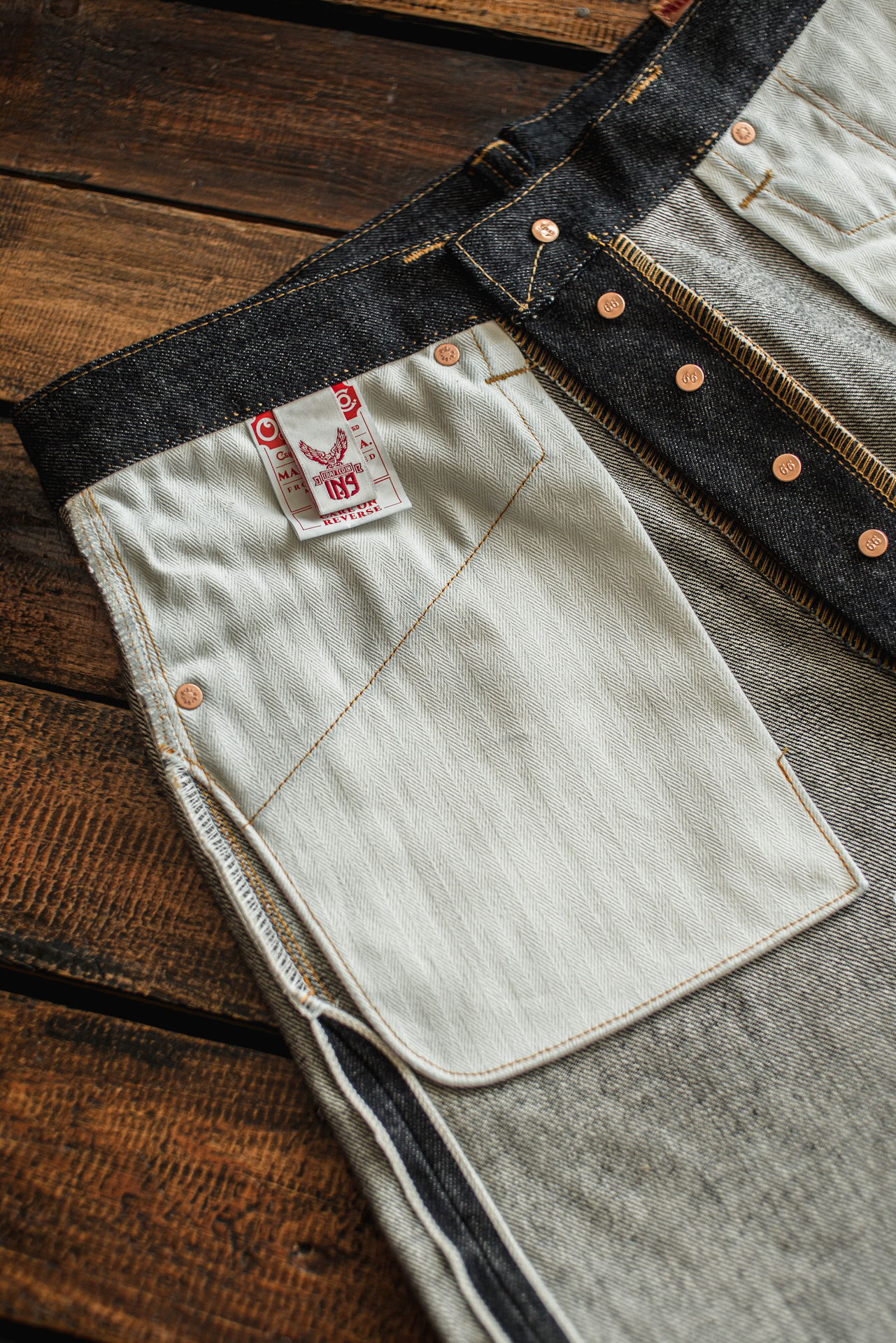
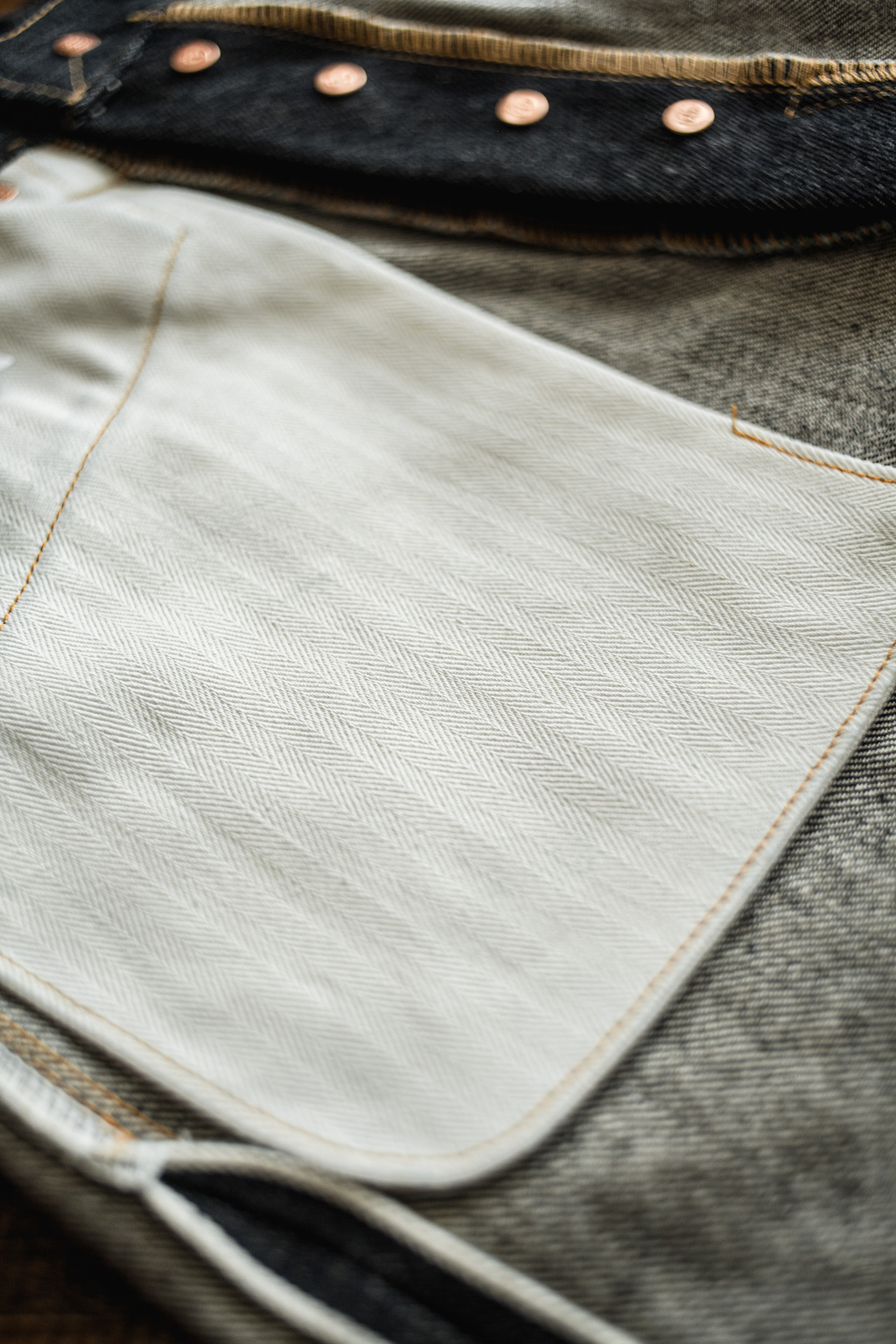
For the pocket bags, we use natural herringbone fabric. Herringbone twill (HBT) was commonly seen during the WWII period, not as a design choice, but out of necessity. The fabric was widely produced for military garments, making it readily available for civilian use. And that’s the essence of wartime production; materials weren’t chosen, they were used as they came.
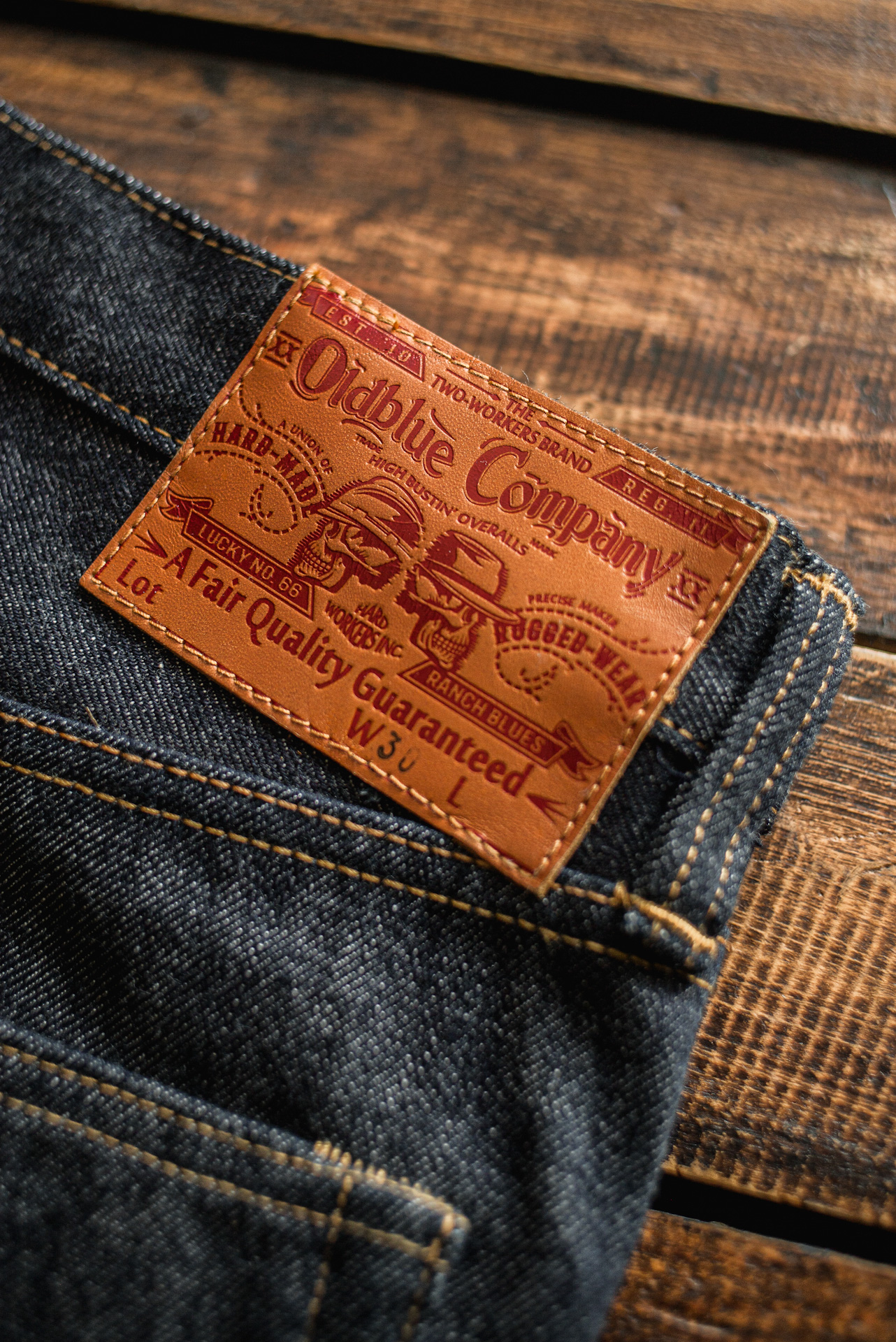
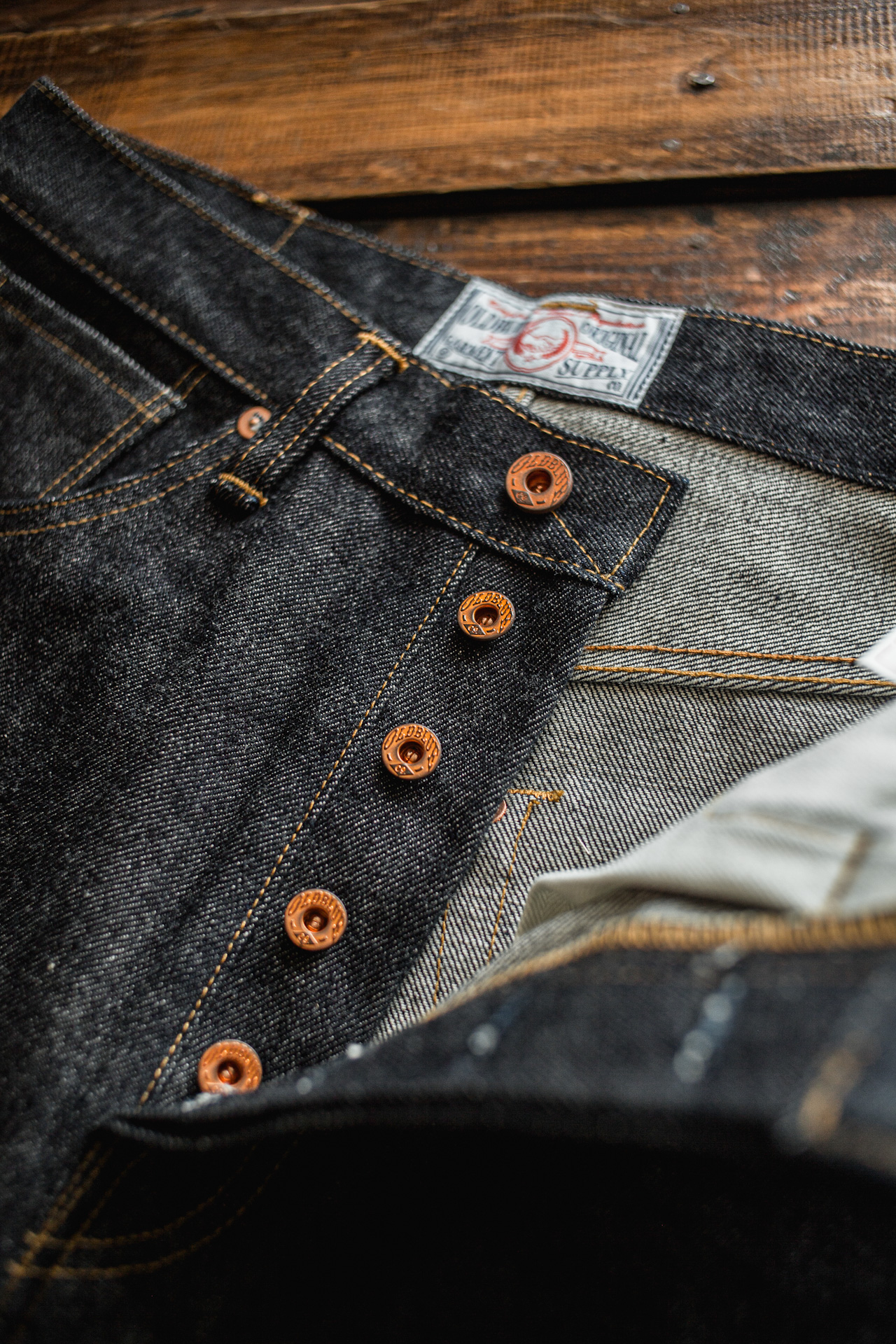
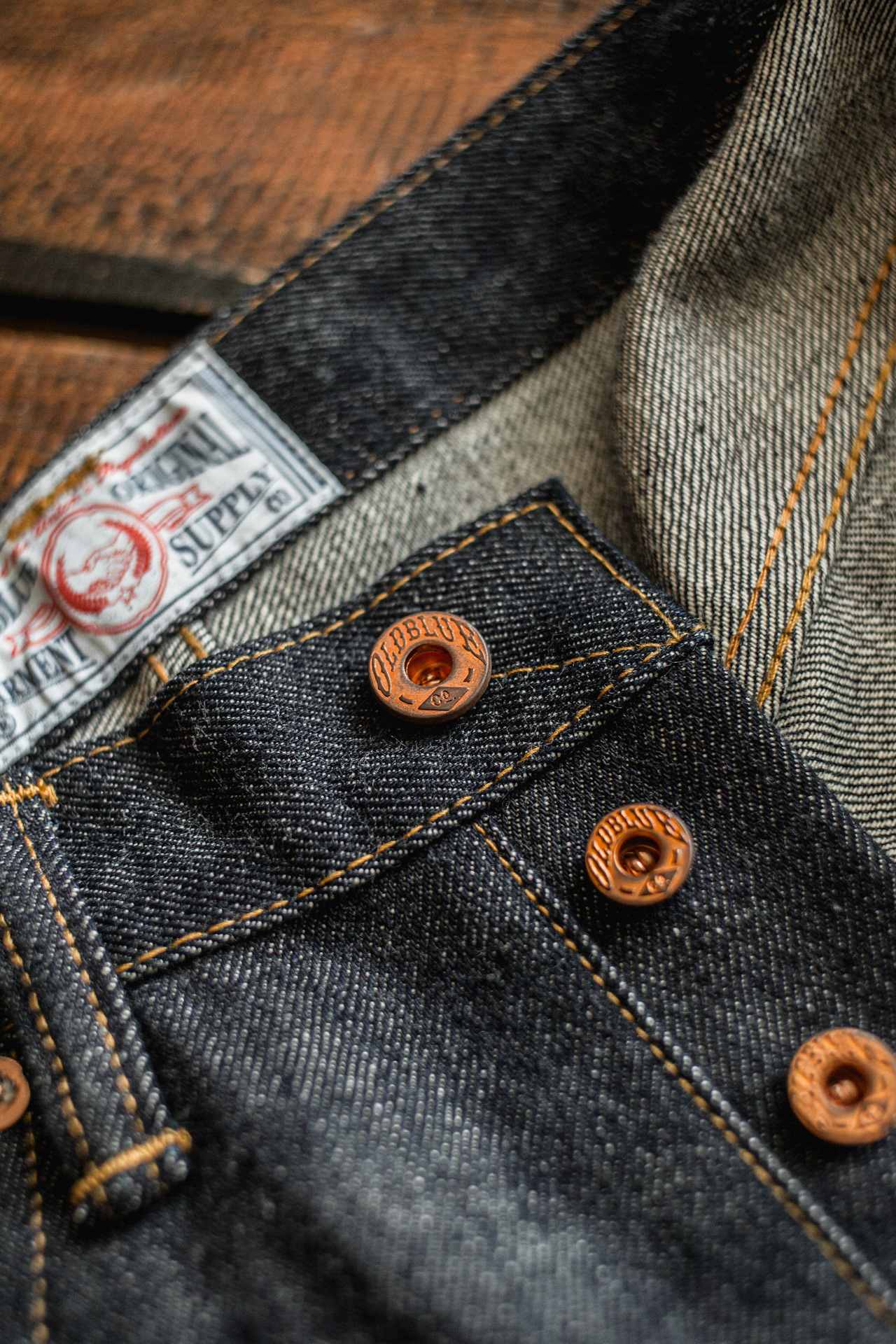
The jeans are finished with our regular Scovill hardware, from copper rivets to brass buttons. Including the classic doughnut button style seen during the wartime era. A tan leather patch, made from locally sourced cowhide, completes the piece. The essence of a WWII jean isn’t perfection; it’s imperfection with purpose. The subtle quirks, the small omissions, and the material substitutions are what make 1944 stand apart from every other denim era. They are not flaws, but marks of a time when every detail had to justify its existence.
Specification
~ 14 oz indigo selvedge denim
~ Woven in Okayama, Japan
~ Rope-dyed indigo
~ Loom-state
~ Unsanforized
~ WWII repro denim fabric
~ Irregular slub yarns
~ Rough and hairy texture
~ 100% cotton
~ Pink selvedge ID
~ Natural herringbone twill fabric for pocket lining
~ Regular straight fit
~ Full cut with high rise
~ Painted arcuate
~ No rivets on coin pocket
~ Hidden rivets
~ Oldblue special customized hardware sets from Scovill USA
~ 100% copper washer-burr rivets
~ Thick zync-alloy doughnut top buttons with burnt-copper finish
~ Brass doughnut fly buttons with burnt-copper finish
~ Pullup cowhide leather patch
~ Single felled inseam construction
Sizing Info
| ’44 CUT – 14 OZ WWII SELVEDGE OKAYAMA | |||||||||||
| 28 | 29 | 30 | 31 | 32 | 33 | 34 | 36 | 38 | 40 | ||
| Waist | 30 | 31 | 32 | 33 | 34 | 35 | 36 | 38 | 40 | 42 | |
| Front Rise | 11.25 | 11.5 | 11.75 | 12 | 12.25 | 12.5 | 12.75 | 13 | 13.5 | 14 | |
| Back Rise | 15 | 15.25 | 15.75 | 15.75 | 16 | 16 | 16.5 | 17 | 17.5 | 18 | |
| Thigh | 12 | 12.25 | 12.5 | 12.75 | 13 | 13.25 | 13.5 | 14 | 14.5 | 15 | |
| Knee | 9 | 9.25 | 9.5 | 9.5 | 9.5 | 10 | 10 | 10 | 10.25 | 10.5 | |
| Leg Opening | 8.5 | 8.6 | 8.75 | 8.9 | 9 | 9.25 | 9.5 | 9.75 | 10 | 10.25 | |
| Inseam | 34 | 34 | 34 | 34 | 34 | 34 | 34 | 34 | 34 | 34 | |
| * may slightly differ each pairs, as they’re cut & sewn by hands
* measurements are in inches and taken before initial shrinkage * expect 3-5% shrinkage * wear your true size |
|||||||||||
Check our measurement guide video for more detailed step by step on how to measure : Oldblue 101 – The Measurement Guide
Related Goods
Sold Out
Sold Out
Dry Goods
Oldblue X Samurai - 21 Oz Kisouma Selvedge (RAW)
IDR 4,250,000.00 – IDR 4,750,000.00 Select options
Sold Out
Sold Out
Sold Out

Sold Out